Agriculture vs Farming
Agriculture is the broad science, art, and business of cultivating soil, producing food, fiber, and other resources, and raising livestock, encompassing the entire food system from research to distribution.
Farming is a subset of agriculture that focuses specifically on cultivating land and raising animals. It refers specifically to the hands-on, practical activity of working the land to grow crops or rear animals. There are various farming types and systems.
In short, all farming is agriculture, but not all agriculture is farming.
Read also… TYPES OF FARMING- SYSTEM OF FARMING
Examples for Clarity
- Agriculture Example (Broad):
In Gujarat, agriculture includes cotton cultivation, dairy farming, irrigation projects, fertilizer use, and textile industries that process cotton into fabric. - Farming Example (Specific):
A farmer in Vadodara cultivating groundnut on his land, watering crops, and selling them in the local market.
Here, the farmer’s activity is farming, but the entire system of crop research, irrigation management, government subsidies, and processing industries falls under agriculture.
Let’s take another example to understand Agriculture vs Farming:
Agriculture: A company developing drought-resistant seed technology or an economist analysing global grain prices.
Farming: A farmer driving a tractor to plough fields, planting seeds, or harvesting wheat.
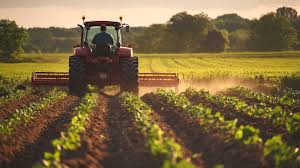
Key Differences between Farming and Agriculture
Aspect Agriculture Farming Definition Broad science and practice of cultivating plants, raising animals, and managing natural resources for food, fiber, and raw materials. Agriculture covers the science and business aspect. Practical activity of cultivating land, growing crops, or raising livestock. Farming is the physical act. Components Agriculture includes research, forestry, and marketing. Farming is limited to crop cultivation and livestock care. Scope Includes farming, agribusiness, irrigation, soil science, pest control, biotechnology, food processing, and resource management. In short, Agriculture is all-encompassing, including technology, policy, and processing. Farming is focused on the direct, on-the-ground production. Limited to crop cultivation and animal husbandry. Activities Land preparation, planting, irrigation, fertilization, pest control, harvesting, storage, distribution, and marketing. Ploughing, sowing, watering, harvesting, and caring for livestock. Focus Sustainability, productivity, and economic systems. Day-to-day operations of producing food and raw materials. Examples Agricultural research on drought-resistant seeds, government policies on food security, agribusiness supply chains. Farmer growing wheat in Gujarat or raising dairy cattle in Punjab.
Why the Distinction Matters
- Policy & Economy: Governments design agricultural policies (covering irrigation, subsidies, exports), not just farming.
- Education: Universities teach agricultural science, which includes farming techniques but also biotechnology, soil chemistry, and agribusiness.
- Sustainability: Agriculture emphasizes long-term resource management, while farming focuses on immediate production.
Challenges & Trade-offs
- Farming Risks: Farmers face weather uncertainty, pests, and market price fluctuations.
- Agriculture Risks: Broader challenges include climate change, soil degradation, water scarcity, and global food security.
- Decision Point: Farming is the hands-on practice, while agriculture is the system that supports, regulates, and innovates farming.
Conclusion
Farming is the practical act of growing crops and raising animals, while agriculture is the comprehensive system that includes farming plus research, technology, policies, and industries that sustain food production.
“All farming is agriculture, but not all agriculture is just farming”.
Read more…
NATURAL FARMING- DIFFERENT FORMS
WHAT IS ORGANIC FARMING- KEY FEATURES
INTEGRATED FARMING SYSTEM