Dryland Farming Techniques
Introduction
Dryland farming refers to cultivation in arid and semi-arid regions with annual rainfall below 750 mm. Relies on rainfall and soil moisture conservation rather than irrigation.
India has nearly 65% of its cultivated area under dryland farming, making it crucial for food security, rural livelihoods, and climate resilience.
Dryland farming is distinct from rainfed farming (moderate rainfall areas) and dry farming (extremely arid zones).
Suitable Crops
- Millets: Bajra, Ragi, Jowar.
- Pulses: Pigeon pea, Chickpea, Green gram.
- Oilseeds: Groundnut, Mustard, Sunflower.
- Other crops: Sorghum, Cotton (in semi-arid zones).
Key Features
- High risk & low productivity due to erratic rainfall/monsoon.
- Frequent moisture stress during crop growth.
- Requires drought-resistant crops and soil-water conservation techniques.
- Farming systems are subsistence-oriented rather than commercial.
Techniques & Practices
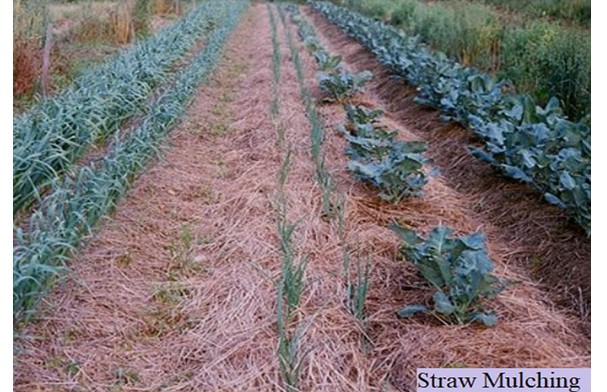
- Soil moisture conservation: Practices like Mulching, contour bunding, strip cropping are used for soil moisture conservation.
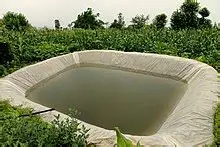
- Water harvesting: Enhances soil moisture, supports dryland farming, and reduces dependence on groundwater. Farm ponds, check dams, percolation tanks etc are used to collect and store water.
- Cropping systems: Intercropping, crop rotation, agroforestry.
- Improved seeds: Drought-tolerant and short-duration varieties.
- Zero tillage & minimum tillage: To reduce evaporation losses.
Advantages of Dryland Farming
- Utilizes vast rainfed areas (≈ 90 million hectares in India).
- Promotes climate-resilient agriculture.
- Supports food security through pulses and millets.
- Encourages sustainable resource use.
Challenges of Dryland Farming
- Erratic Monsoon/Rainfall → Hence risk of frequent crop failures.
- Soil Degradation → erosion, nutrient depletion, desertification.
- Low Productivity → generally, yields are 1/3rd of irrigated farming.
- Water Scarcity → limited irrigation facilities.
- Technology Gap → poor adoption of modern practices among small farmers.
- Market Issues → price instability for pulses and millets.
- Socio-economic Constraints → small landholdings, poverty, lack of credit.
Strategies for Improvement
- Water Management: Rainwater harvesting, farm ponds, check dams, watershed projects.
- Soil Conservation: Mulching, contour bunding, strip cropping, agroforestry.
- Crop Diversification: Millets, pulses, oilseeds, short-duration drought-resistant varieties.
- Improved Practices: Intercropping, crop rotation, zero/minimum tillage.
- Technology Adoption: Climate-resilient seeds, precision farming, ICT-based advisories.
Government Support/Initiatives
- National Watershed Development Project for Rainfed Areas (NWDPRA).
- Integrated Watershed Management Programme (IWMP).
- Rashtriya Krishi Vikas Yojana (RKVY) – supports dryland technologies.
- National Mission on Sustainable Agriculture (NMSA) – promotes climate-resilient farming.
- Millet Mission – encourages cultivation of “nutri-cereals” in dryland regions.
- Community Participation: Involving local farmers in watershed and resource management.
Conclusion
Dryland farming is both a challenge and an opportunity. With integrated watershed management, climate-resilient crops, and policy support, India can transform dryland regions into hubs of sustainable agriculture. Strengthening traditional knowledge with modern technology is the key to ensuring food security and rural prosperity.
Dryland farming is not just an agricultural practice but a survival strategy for millions of farmers in India’s semi-arid regions.
Multiple Choice Question (MCQs)
1. Dry farming is most suitable for which type of regions?
A. High rainfall regions
B. Semi-arid and arid regions
C. Coastal regions
D. Flood-prone regions
Answer: B. Semi-arid and arid regions
2. The main objective of dry farming is:
A. Increasing irrigation facilities
B. Conserving soil moisture
C. Growing cash crops only
D. Preventing soil erosion through afforestation
Answer: B. Conserving soil moisture
3. Which crop is commonly grown under dry farming conditions in India?
A. Rice
B. Wheat
C. Jowar (Sorghum)
D. Sugarcane
Answer: C. Jowar (Sorghum)
4. Which of the following practices is essential in dry farming?
A. Frequent irrigation
B. Mulching
C. Excessive fertilizer use
D. Continuous cropping without rotation
Answer: B. Mulching
5. Dry farming mainly depends on:
A. Groundwater irrigation
B. Rainfall
C. Canal irrigation
D. River water diversion
Answer: B. Rainfall
6. The term “rainfed agriculture” is often used interchangeably with:
A. Wetland farming
B. Dryland farming
C. Plantation farming
D. Hydroponics
Answer: B. Dryland farming
7. Which soil type is most suitable for dry farming?
A. Sandy soil
B. Black cotton soil
C. Laterite soil
D. Peaty soil
Answer: B. Black cotton soil